



Finds Incremental Revenue Anywhere it exists:
Moves your commercial levers to Deliver Incremental Revenue:
| RM | Historical Bookings, Price | Bookings as a function of Price |
| Sales | Agency Sales, Incentives | Sales as a function of Incentives |
| Network | Bookings, Schedule | Traffic as a function of Schedule |
| Marketing | Response, Offers | Response as a function of Offers |


Core Tech

Full Network Effect and Linearization of Revenue, Demand Can Be Expressed with Independent Microsegments
Use APIs to link up any app to the Microsegment data model
Execute Local Optimization for each Microsegment in parallel. Network is globally optimized due to elegant MS design
Create Multi Variable Demand Model For Each Microsegment
Vectorize Inputs, Outputs in Microsegments
Create 1 training and 1 scoring pipeline
Automatically create Microsegment Model
Data imported from Source. No ETL Needed
Introductions
Airline Revenue Management
What sets us apart
The opportunity together
Next steps
Quad Advisory explores how Artificial Intelligence is reshaping
personalization and revenue optimization for airlines
Insights derived from microsegments
inform both strategic and operational
decisions:
This vertical integration ensures that
personalization is not confined to
marketing but is embedded across all
customer touchpoints.
AI-driven personalization is redefining
the passenger experience. For decades,
flying was largely transactional –
moving travelers efficiently from point A
to point B. Today, airlines recognize the
economic and experiential value of
tailoring offers and services to individual
preferences and travel contexts.
AI-driven personalization now spans
dynamic pricing, targeted promotions,
in-flight entertainment, loyalty
engagement, and real-time chatbots.
The goal is clear: increase satisfaction
and yield by aligning experiences with
each traveler’s unique profile. Leading
carriers such as Lufthansa, Delta, and
JetBlue are already deploying advanced
data platforms that connect digital,
operational, and service touchpoints to
create seamless journeys.
Yet this growing intimacy comes with a
dual challenge. On one hand, AI enables
unprecedented understanding of
traveler behavior. On the other, it risks
eroding privacy and trust when data is
over-collected, shared with partners, or
monetized externally. The core
dilemma is how to personalize
responsibly while maintaining
profitability in an industry of thin
margins and price-sensitive customers
Balancing privacy and
profitability
Running an effective personalization
program means reconciling two
opposing forces: protecting customer
privacy and maximizing revenue.
Regulations such as the EU’s General
Data Protection Regulation (GDPR)
impose strict limits on profiling and
automated decision-making.
Meanwhile, airlines must still
compete on differentiated offers
and personalized pricing.Traditional
‘segment of one’ personalization often
relies on detailed user profiles –
precisely what GDPR seeks to limit.
Overly individualized targeting
risks breaching principles of
transparency, purpose limitation,
and data minimization. Conversely,
cautious approaches can dilute
marketing precision and revenue
potential.
Quad Advisory’s Personalized AI (PAI)
system offers a solution grounded in
optimization and privacy. Drawing on
deep revenue-management expertise, it
balances personalization depth with
responsible data design through a
framework built on multidimensional
microsegments.
Microsegments: Contextual
personalization without
intrusion
A key principle of the PAI system is that
personalization does not require
knowing every traveler individually.
Instead, it organizes passengers into
microsegments – groups of travelers
with similar behavioral and contextual
attributes – while anonymizing
identities. Each microsegment
integrates both customer features
(purpose of travel, purchase behavior,
seasonality) and airline features (route,
market, channel, point of sale, agent,
competition, Equipment).
This dual-lens approach enables
demand forecasting and dynamic
pricing that reflect both customer intent
and profit optimization. For example,
two passengers with similar
demographics might belong to different
microsegments if they travel in distinct
markets such as the US and Europe,
where pricing dynamics diverge.
Likewise, a business traveler may shift
segments when booking a short
domestic trip versus an international
family vacation.
At the computational level, each
microsegment is powered by tensor
Aligning short-term revenue
with long-term loyalty
Effective personalization must serve
two key objectives: near-term yield and
long-term loyalty. The PAI system
enables airlines to set optimization
goals for each microsegment—
maximizing revenue in some while
emphasizing retention or share growth
in others.
Quad’s research identifies multiple
strategic personalization scenarios,
ranging from high-impact revenue
opportunities to cases that demand
product or pricing redesign. By
classifying microsegments into these
scenarios, the PAI system ensures that
marketing and pricing efforts focus
where personalization delivers the
greatest economic and experiential value.
Enterprise-wide
personalization
A defining feature of Quad’s approach
is consistency across the organization.
Agentic AI: the new frontier
and its risks
A new wave of Agentic AI – autonomous
systems capable of executing complex
commercial actions – is beginning to
transform airline operations. Agentic AI
can autonomously manage offers,
bookings, and service recovery,
dynamically adjusting prices or even
completing reservations on behalf of
travelers. While this autonomy
promises efficiency and speed, it
introduces new risks, including opaque
decision-making, unintended biases,
privacy exposure, and suboptimal
financial outcomes if not properly
constrained.
Unsupervised or heuristic-driven
agentic systems may prioritize shortterm conversion over long-term
profitability or compliance. To counter
this, Quad’s PAI system embeds
quantitative optimization layers that
bound agentic actions within
measurable, profit-driven, and policycompliant limits. By integrating
mathematical rigor and interpretability
into autonomous personalization, it
Gopal Ranganathan
AUGUST 2025


In today’s competitive airline industry, providing
personalised services to passengers is
becoming increasingly important for customer
satisfaction and business success. Gopal
Ranganathan from Quad Optima Analytics has
developed an innovative artificial intelligence
system to help airline executives implement
and govern personalisation programmes. This
cutting-edge technology aims to increase
profits by tailoring services to individual
customers while maintaining sound revenue
management principles.
The Rise of Personalisation in Air Travel
For most travellers, flying is far from a personalised experience.
From booking to boarding, passengers are often treated as
interchangeable components in a vast, complex system designed
to move as many people as possible from point A to point B.
However, the airline industry is beginning to recognise the value of
tailoring services to individual preferences and needs.
Air travel personalisation can take many forms, from customised
promotions and targeted advertising to personalised in-flight
entertainment recommendations and chatbot assistance. The
goal is to improve customer satisfaction by providing services
and offers relevant to each passenger’s unique preferences and
circumstances.
However, implementing effective personalisation at scale is a
significant challenge for airlines. With millions of passengers,
countless possible service combinations, and the need to balance
personalisation with overall revenue management, airlines require
sophisticated systems to make it work.
This is where Gopal Ranganathan’s innovative artificial intelligence
system comes in. As the founder and CEO of Quad Optima
Analytics, Ranganathan has leveraged his extensive experience
in airline revenue management to develop a powerful AI tool
designed specifically to help airline executives implement and
govern personalisation programmes.
An AI Copilot for Airline Executives
Ranganathan’s system, which he calls the Personalisation AI
System (PAI), serves as an AI-powered decision support tool for
airline C-suite executives.
Rather than relying solely on static presentations, spreadsheets
and dashboards, the PAI system taps directly into the airline’s
real-time transaction data to model the current state of the
organisation.
Ranganathan explains that today’s airline executives get most
of their information through PowerPoint presentations, Excel
spreadsheets and dashboards. His AI system is designed to
give them a much more dynamic and data-driven view of
personalisation opportunities.
The PAI system ingests massive amounts of data from passenger
name records, which contain details of each passenger’s itinerary
and booking. It then overlays this core data with information
about personalisation actions (like targeted promotions or
recommendations) and revenue management decisions.
Microsegments: The Building Blocks of
Personalisation
A key innovation in Ranganathan’s system is the use of what he
calls ‘microsegments’. These are multi-dimensional data structures
that group similar passengers and transactions together, based
on numerous attributes.
Ranganathan notes that traditional customer segmentation
approaches are often too static and one-dimensional. His
microsegments allow for a much more nuanced and dynamic
understanding of customers.
For example, a business traveller might fall into different
microsegments depending on whether they’re booking a short
domestic flight for a day trip versus an international journey
with their family. The PAI system can recognise these contextual
differences and adjust its personalisation strategies accordingly
These microsegments serve as the foundation for the PAI system’s
artificial intelligence and machine learning capabilities. Advanced
mathematical models called ‘tensors’ are embedded within each
microsegment, allowing the system to rapidly process new data
and generate insights.
Four Pillars of Personalised Intelligence
Ranganathan’s PAI system is built on four key components
that work together to drive personalisation. First are the
microsegments, which serve as the foundational data structures.
Second is the forecast engine, which uses a variety of predictive
modelling techniques to forecast key metrics like bookings,
revenue, and customer loyalty for each microsegment.
Third is the optimiser, which uses advanced mathematical
techniques to determine the best combination of personalisation
actions for maximising desired outcomes (like revenue or profit)
across all microsegments. Finally, the system generates specific,
actionable recommendations for personalisation initiatives, along
with forecasts of their potential impact.
Ranganathan emphasises that his system doesn’t just provide
high-level insights. It gives executives and their teams specific
actions they can take, such as sending targeted discount offers to
loyalty members who are at risk of switching to a competitor.
Balancing Short-Term Revenue and
Long-Term Loyalty
One of the key challenges in airline personalisation is balancing
short-term revenue maximisation with long-term customer loyalty
and market share growth. Ranganathan’s system is designed to
help airlines navigate these trade-offs
scientia.global
He explains that traditionally, revenue management has focused
on short-term tactical decisions to maximise revenue on each
flight. However, effective personalisation requires a more holistic
view that considers customer lifetime value and long-term market
positioning.
The PAI system allows airlines to set different optimisation
objectives and constraints to reflect their strategic priorities. For
example, an airline could configure the system to maximise shortterm revenue in some microsegments while prioritising customer
retention in others.
This flexibility is critical because not all personalisation efforts are
equally valuable. Ranganathan’s research has identified four key
scenarios for personalisation initiatives. These range from ideal
situations where personalisation can drive increased bookings
and higher prices to more challenging scenarios that may require
drastic actions or a rethinking of the product offering.
Ranganathan explains that his system helps airlines identify
which scenario applies to each microsegment. This ensures that
personalisation efforts are targeted where they can have the most
impact.
From C-Suite to Front Line
A key advantage of Ranganathan’s approach is that it provides a
consistent framework for personalisation across all levels of the
airline organisation. The same microsegment-based insights and
recommendations that inform C-suite decision-making can also
guide front-line staff in their interactions with customers.
Ranganathan emphasises that effective personalisation requires
alignment from the top of the organisation all the way down
to individual customer touchpoints. His system provides that
alignment by generating insights and recommendations that are
relevant at every level.

For example, the system might recommend a targeted
upgrade offer for a specific microsegment of customers. This
recommendation would inform high-level strategy discussions
in the C-suite, guide marketing teams in designing the offer, and
provide talking points for customer service agents interacting with
eligible passengers.
The Future of Airline Personalisation
As airlines continue to invest in personalisation capabilities,
Ranganathan sees several key trends emerging. These include
increased use of artificial intelligence and machine learning,
greater integration of personalisation across all customer
touchpoints, more sophisticated use of contextual data,
enhanced collaboration between different airline departments,
and a growing focus on using personalisation to drive long-term
customer loyalty and market share growth.
Ranganathan and his team at Quad Optima Analytics are
continually refining and expanding their PAI system to help airlines
navigate this evolving landscape. They are currently working on
enhancements to incorporate more real-time data sources and
to provide even more granular personalisation recommendations.
Ranganathan believes the potential for personalisation
in the airline industry is enormous. However, he notes that
realising that potential requires sophisticated tools that
can handle the complexity and scale of airline operations.
That’s what his team is focused on delivering.
Charting a Course for Personalised Skies
As air travel continues to recover from the disruptions
of recent years, personalisation is likely to play an
increasingly important role in airlines’ strategies for
attracting and retaining customers. Ranganathan’s
Personalisation AI System offers a powerful tool for airline
executives looking to navigate this new area.
By combining cutting-edge artificial intelligence with deep
industry expertise, Ranganathan and his team are helping
to chart a course towards more personalised, satisfying,
and profitable air travel experiences. As the PAI system
continues to evolve and improve, it may well become an
indispensable copilot for airline leaders seeking to soar in
the age of personalisation.

Gopal Ranganathan
Quad Optima, Chicago, IL, USA
Gopal Ranganathan is the founder of Quad Optima, a company
specialising in Advanced AI and Digital Twins. With a background
in the airline, transportation, and travel industries, he has
established himself as a leader in commercial departments and
as a management consultant. Ranganathan advises C-Suite
executives on AI strategy and works with managers to implement
these strategies, focusing on delivering real return of investment
on AI projects. He has developed a new paradigm for AI data
modelling and advanced deep learning, aimed at generating
significant revenue and profit opportunities for companies.
Ranganathan is the author of a book on profit optimisation using
advanced analytics and has written a paper on personalisation
driven by sound revenue principles. He holds an MBA from the
University of Chicago and a bachelor’s degree from the Indian
Institute of Technology.
gopal@quadoptima.com https://www.quadoptima.com
G Ranganathan, Airline CEO’s AI system for driving personalization, Journal of Revenue and Pricing Management, 2023, 22, 166–170. DOI: https://doi.org/10.1057/ s41272-022-00402-w


Tech., IIT Madras, MBA, University of Chicago 20 years in airline revenue management
Developed Sabre’s Origin & Destination revenue management system Headed revenue management for Jet Airways, Go Air and Kingfisher Solved revenue management for Air France, United, American at Sabre Solved revenue management for TAP Portugal with Quad Optima
Designed and built the next-gen AI/ML & big data-based RM system at the core of Quad Optima





Airlines are a $600 billion sector for airlines – spread across ~5,000 airlines Global profits are around 3% to 5%: $25 billion per year
RM can help drive uptick of 2% to 5%: That’s a potential uptick of $12 billion to $30 billion globally Almost all this revenue gain falls to the bottom line: a potential 50% to 100% gain in profits
The software and services sector here is massive, and worth ~20% of the gain: $2.5 billion to $6 billion
Sabre, Flyr, Kambr and others are in the field
Most operate on mainframe-world, 20th century systems
These systems work on long-term time-series based optimization
Covid has killed that predictability. Now is the time for big data, AI/ML. Where Bayesian + Monte Carlo rules. The time for Quad Optima. This can be a billion-dollar opportunity for both of us.

Virtually all RM systems work on the past-predicts-future Time Series theory. But past sales alone do not predict future sales.
This theory fell apart a long time ago, and Covid made it obsolete
Only Quad uses a combination of Bayesian regression with the Monte Carlo method. There are numerous inputs, from past sales to social media signals, to virus spread data to news announcements to discounts to weather patterns
This delivers predictions that fit actual outcomes better.
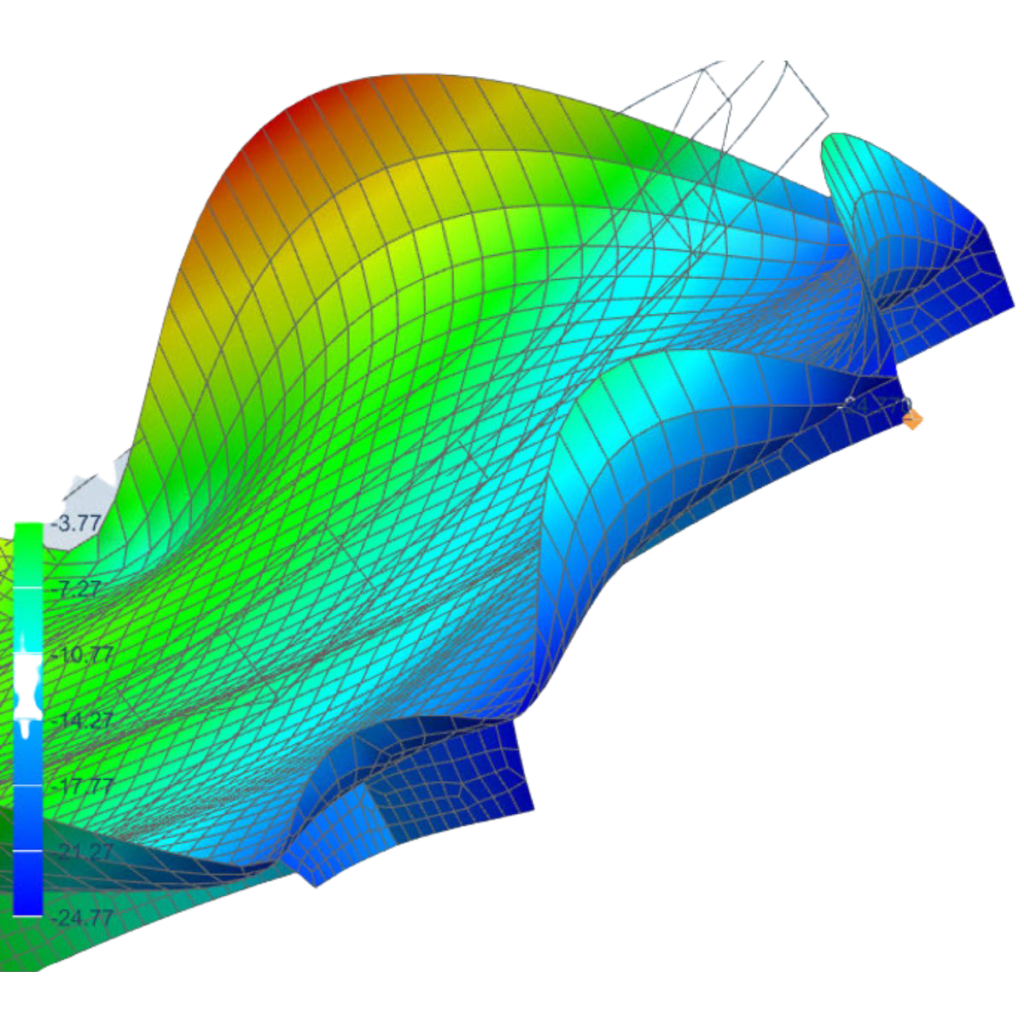
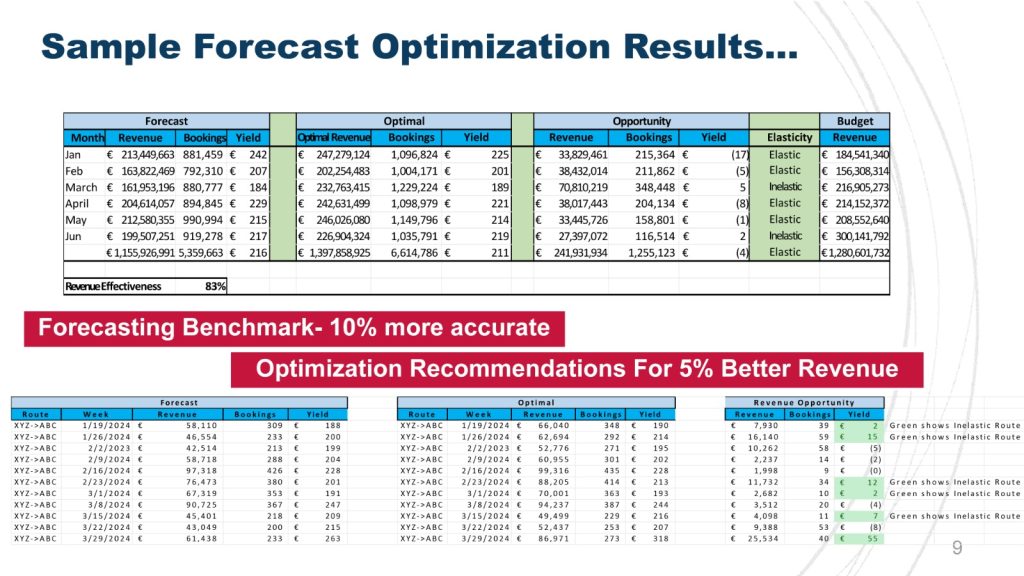
How much better? By around 10%. An accuracy of 90%+ instead of 80%+.
At revenue levels anywhere above the $10 m+ range this is an enormous difference.
C level and Senior Managers
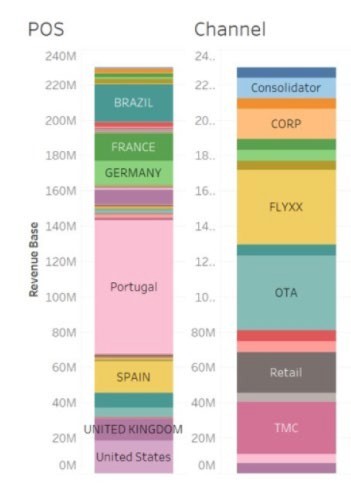
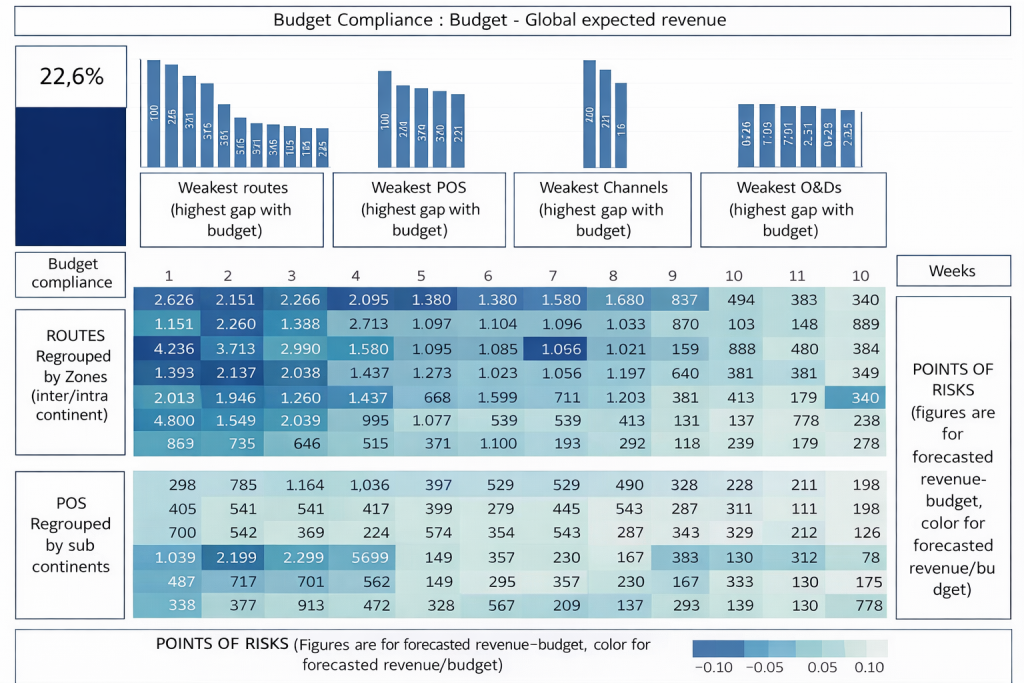
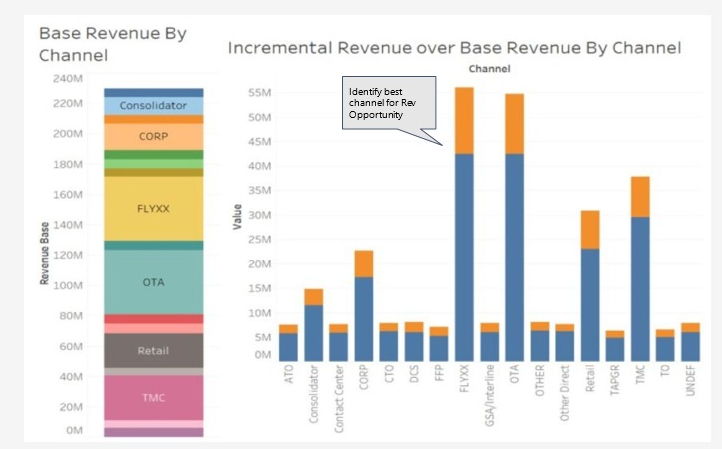
| Lever of Optimization | Quad RM | Sabre RM | Pros RM | Air RM | Amadeus RM | Kambr RM |
|---|---|---|---|---|---|---|
| Pricing | ✓ | ✓ | ✓ | ✓ | ✓ | ✓ |
| Cost of Sale | ✓ | |||||
| Distribution | ✓ | |||||
| Promotions | ✓ | ✓ | ||||
| Loyalty | ✓ | ✓ | ||||
| Ancillary | ✓ | ✓ | ✓ | ✓ | ✓ | ✓ |
| Cargo | ✓ | |||||
| Forecasting | ✓ | ✓ | ✓ | ✓ | ✓ | ✓ |
| Network | ✓ | ✓ | ||||
| AI / ML Platform | ✓ |
United Airlines, to start with
The top 5% of airlines globally: 125 of them And hotels from there on…
Multiple billion-dollar opportunities

Running a small airline isn’t easy. You’ve got limited data, tight teams, and your network changes fast. Most airline revenue and planning systems are built for big, established carriers—they’re expensive, complicated, and just don’t fit the way small airlines actually work.
That’s where TensorQ Air comes in. It’s made for small airlines that want to boost demand, control risk, and grow profitably right from the start. Instead of patching together different tools, you get one AI-powered commercial engine. Network Planning, Sales, Revenue Management—all in one place. And you don’t need a decade of booking history to get going.
Most small airlines don’t have years of data to work with. Forecasting and optimizing can feel impossible. TensorQ Air changes that. The system uses Bayesian statistics to build demand and capacity estimates from scratch, so you can make smart decisions on day one.
And as your airline starts flying and new data rolls in, TensorQ Air keeps learning and getting better. Uncertainty shrinks, growth speeds up. You don’t have to wait years to make good calls, even in the earliest stages.

Building a network from the ground up is tough. Which routes should you launch first? Where do you add or cut capacity? How do you keep growth profitable at every step? TensorQ Air helps you answer these questions by modeling demand, pricing, and capacity together. No more guessing or costly mistakes—just clear, strategic scaling.
For small airlines, breaking into the market fast matters. TensorQ Air bakes sales optimization right into its core. You can launch early promotions, set up loyalty programs, and grow your agency and channel sales from the start. Every sales action lines up with your network and revenue goals, so you’re building something sustainable—not just chasing volume.
Forget complex, bloated revenue management. TensorQ Air keeps it simple and effective. Set penetration pricing for new routes, make dynamic offers that respond to how customers behave, and get smarter about partner and interline pricing. With causal AI and risk-aware optimization, you grow revenue and protect your margins—no need for a big team or complicated rulebooks.
Small airlines can’t afford to run a bunch of disconnected systems. TensorQ Air uses a microsegment-based model that brings everything together—Network Planning, Sales, Revenue Management. You get faster execution, clearer decisions, and less operational hassle. Perfect for lean commercial teams
TensorQ Air starts small and scales as you do. It works even if you don’t have much data, learns as you go, and you won’t have to rip it out for something else down the line. Basically, you get the commercial smarts of a big airline, without the cost or headaches.
It’s built specifically for small and growing airlines
You see results from day one—not years later
It’s simple, fast, and gets you to sustainable, profitable growth
